

Kohala Zipline Canopy Tour and Kohala Zip & Dip
Most Unique Big Island Zipline Tours
Join us for a Big Island canopy experience like no other. Perched amongst the trees of Halawa Gulch, Kohala Zipline’s Kohala Canopy Adventure features elevated suspension bridges, soaring tree platforms and thrilling ziplines. From the moment you enter the aerial trekking course, you’ll be enthralled by the magic of Kohala. Whether you are a real zipline enthusiast or a first time adventure seeker, you’ll find that Kohala Zipline provides a canopy experience that is unparalleled on the Big Island.
We’re Building An Exciting NEW Zipline Experience. Stay Tuned! Bookings Starting Summer 2026!
Kohala Canopy Adventure:
Experience the only full canopy tour on the island, featuring 8 lines, 6 sky bridges, and a rappel, during our Kohala Canopy Adventure. Designed and built within a towering forest on a private nature reserve, this elevated adventure is perfect for all – whether you’re a beginner or seasoned expert. Our certified zipline guides promise both safety and comfort while sharing their knowledge of the area’s natural and cultural history.
Kohala Canopy Adventure Highlights:
- Zip, trek & rappel through a sustainably built aerial trekking course.
- Experience the thrill of flying from tree to tree and reaching speeds up to 45 MPH while taking in the beauty of the forest canopy
- Tree to Tree zipping means no walking up and downstairs in between every zip.
- Enjoy majestic views of the Kohala Coast, Maui, and ancient Hawaiian agriculture systems
- Take a fun off-road drive in one of our 4×4 vehicles to the top of our course.
- We comply with the highest level of safety standards set by the industry’s internationally recognized governing body; Association for Challenge Course Technology (ACCT).
- Capture the fun with a GoPro camera rental or have your guide take photos for you with our photosystem designed specifically for ziplines.

Don’t see the tour time you want? Please call 808-331-3620 for more availability. We love a party! Call for details on how to book groups larger than 8.
Zipline Tour Facts
- 8-Line Zipline Canopy Tour.
- 2 certified canopy guides on every tour.
- Rated Easy to Moderate.
- Approx. 2.5 – 3 hours, start to finish.
- Rainwear, water, all safety gear included.
Questions? Check our FAQ’s or call us.
Zipline Tour Requirements
- Participants must be at least 8 years old.
- Weigh between 70 and 270 lbs. Participants will be weighed at check-in.
- Must be able to walk over uneven terrain and handle one short walk up about 25 stairs. This tour is not for expectant mothers.
- Guests must wear closed-toe walking shoes and Pants, capris, or knee length shorts. No Tank tops, Short-shorts, or any clothing that may allow direct skin contact with the harness.
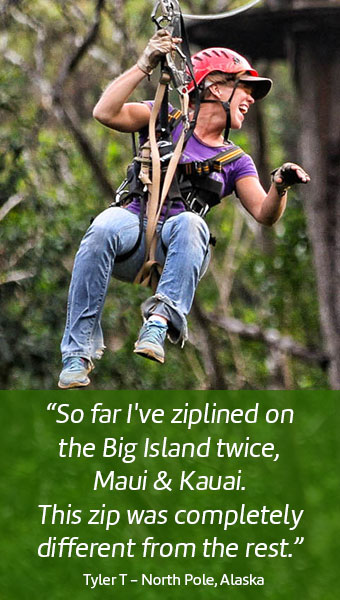
Great Kamaaina Discounts Available for a Limited Time: Call 808 331-3620 to save with your Hawaii ID!
Kohala Zip & Dip
Spend an exhilarating and inspiring day in North Kohala and experience a land of stunning beauty and profound cultural significance. Zipline well above the forest floor, picnic on the above the Kohala Coastline & swim under an exclusive waterfall fed by a cool mountain stream.
Kohala Zip & Dip Highlights:
- Take a fun off-road drive through private lands
- Stroll through a private nature reserve and see three secluded waterfalls.
- Swim under a private waterfall.
- Eat lunch at our private picnic spot overlooking Kohala Coastline.
- Fly through Kohala Zipline’s full aerial canopy course, including 8 lines, 6 sky bridges, and a rappel.
- Complimentary snacks and drinks are available throughout the tour.
Schedule: Approximately 6 hours round trip, departs from Kohala Zipline Headquarters in Hawi.
Included in the Tour: Snack, deli-style lunch with assorted soft drinks and juices.
Gear Provided: Trekking poles, warm wear, towels, day packs, and rain jackets.
Group Size: Tours limited to a maximum of 9 guests
What to Bring & Wear: Closed-toe shoes required. Bring a bathing suit (can be worn under clothes), hat, sunscreen, and a light jacket.
Don’t see the tour time you want? Please call 808-331-3620 for more availability. We love a party! Call 808-331-3656 for details on how to book groups larger than 9.
Zip & Dip Facts
- Approx, 7 hours round trip from most resorts.
- Snacks, deli-style lunch with assorted soft drinks/juices provided.
- Trekking poles, bug spray, towels, day packs and rain gear provided.
- Our low guide to guest ratio creates an intimate experience
- Closed-toe shoes required. Bathing Suit (can be warn under clothes), hat, sunscreen and a light jacket.
Zipline Tour Requirements
- Participants must be 8 years old.
- Weigh between 70 and 270 lbs. Participants will be weighed at check-in.
- Must be able to walk over uneven terrain and handle one short walk up about 25 stairs. This tour is not for expectant mothers.
- Guests must wear closed-toe walking shoes and Pants, capris, or knee length shorts. No Tank tops, Short-shorts, or any clothing that may allow direct skin contact with the harness.
Big Island Zipline Tour FAQs:
Is zipling difficult?
Kohala Zipline on the Big Island of Hawaii doesn’t require intense physical exertion, although the course includes a short uphill trail hike. Our canopy tour guides will clip you securely into your harness, provide a detailed safety briefing, and give clear hands-on instructions throughout the tour.
What happens if I decide I don’t want to zip anymore? How do I get down?
Zipline tours are adventures, by definition unusual, exciting, and somewhat daring. Kohala Zipline on the Big Island of Hawaii accommodates participants who want to try a canopy tour only to find out that it’s not for them. You’ll have a chance to explore your comfort zone during your first two short tree-based zips, after which you have an option to exit the course at Platform Three before our zips get bigger and faster. While it is technically possible to exit at any time during the Kohala Canopy Tour, doing so may delay fellow participants in your and even in subsequent groups. Keep in mind, your safety and comfort are top priority for our guides.
How safe are ziplines?
At Kohala Zipline on the Big Island of Hawaii, participant safety comes first. Our elevated platforms are engineered and tested to exceed twice the maximum limit on working loads. They are built into trees with strict structural integrity. The course incorporates redundant safety systems in design elements and daily operations. Kohala Zipline complies with or exceeds all standards of the Association for Challenge Course Technologies (ACCT).
For more ziplining Frequently Asked Questions, visit our FAQs.

Other award winning Volcano, Maunakea, and Waterfall tours from our sister company Hawaii Forest & Trail